
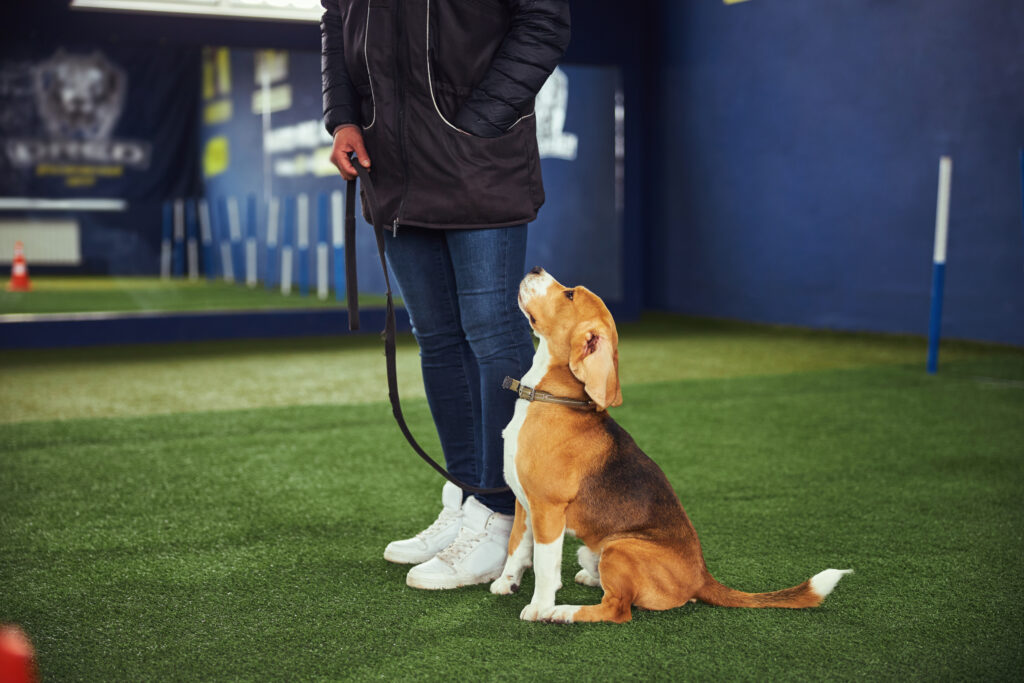
If walks with your dog feel more like a tug-of-war than a relaxing outing, you’re not alone. Amber Todd, Behavior Supervisor at HSPPR, shares simple, effective tips to improve leash manners and help turn daily walks into a more positive experience for both you and your dog.
No dog, or human, for that matter, is born knowing how to walk on a leash alongside another species. Think of your dog as your dance partner, and your walks together as a dance; when you’re in sync, it flows smoothly, but without practice, you may find yourselves stepping on each other’s toes. Developing strong leash skills helps you move together with ease and confidence, making it safer to navigate the world as a team.
Before we get started, let’s talk about using the right tools for the job. Some dogs are comfortable walking on a standard flat collar and leash, while others may benefit from additional support, such as a body harness, martingale collar, or head halter. Choosing the right equipment can make training safer, clearer, and more effective for both you and your dog.
1. Starting with the right equipment
Set yourself up for success by starting with the best gear for you and your dog:
• A flat collar (simple, lightweight, easy to put on and remove, holds tags)
• A well-fitted body harness (front-clip options can help reduce pulling)
• A fabric martingale collar (prevents dogs from slipping out of their collar)
• A head halter (useful for strong dogs or handlers needing extra control)
• A standard 4–6-foot leash (avoid retractable leashes while training)
• Training treats that your dog enjoys
2. Teaching the basics
Starting indoors or in another low-distraction environment, such as an empty parking lot, can help your dog learn before heading into a busy park environment:
• Reward your dog for staying near you with praise and treats
• Reinforce offered eye contact and check-ins
• Give plenty of “go sniff” breaks
• Keep training sessions short and sweet, gradually make them longer as you are succeeding
3. Problem-solving pulling
Pulling is one of the most common challenges because dogs learn quickly that pulling works! It gets them to where they want to go. To change this:
• Avoid the bungee arm- keep your leash holding hand anchored to your core
• Stop moving when the leash gets tight
• Resume walking when the leash loosens
4. Handling Distractions
If your dog is easily distracted by people, dogs, or wildlife, try this:
• Drop a scatter of treats on the ground
• Use a treat and lure your dog to pull off the path and sit, reward them repeatedly until the distraction passes
• Toss a “find it” treat in front of your dog, once they pick it up quickly toss another and use this game to keep them walking away from the distraction
5. Avoid these common mistakes
• Using punishment or leash corrections
• Expecting too much too quickly
• Inconsistent handling between family members
• Skipping foundational training steps
• Not providing adequate exercise and mental enrichment in between training sessions
Leash training is about more than just behavior; it’s about building a relationship. When your dog learns to walk with you, rather than against you, it strengthens trust and communication. Every step forward, no matter how small, is progress!
Need extra help?
If your dog is struggling with leash reactivity, fear, or frustration, reaching out to a trainer or behavior professional can make a big difference. Support early on can set both you and your dog up for long-term success.
HSPPR offers free-25 minutes behavior phone consultations for dog and cat owners, giving you the opportunity to talk through concerns and get guidance tailored to your pet. You can also explore our Behavior Resource Guide to find local trainers and learn how to identify a qualified, trustworthy professional who’s the right fit for you and your pet.