
July 14, 2026

Sun’s Out, Paws Out: Summer Safety Tips for Pets

Summer means longer days, sunshine, road trips, hikes, backyard barbecues, and plenty of opportunities to spend time outdoors. If you’re excited to soak up the season, chances are your pets are too.

While summer can be one of the best times of year to make memories with your four-legged family members, warmer temperatures also bring unique risks. From hot cars and scorching pavement to wildfire season, a little preparation can help keep your pets safe all summer long.

Hot Dogs Belong in Buns, Not Cars

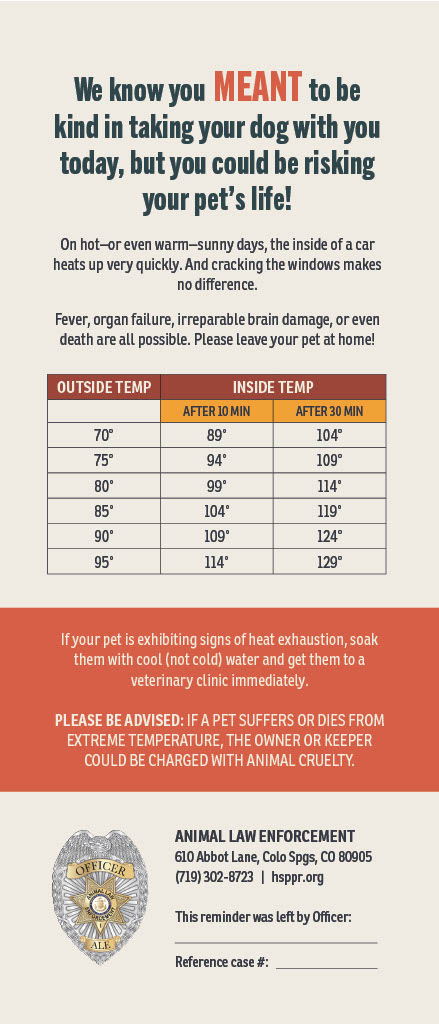
Even if you’re only stepping away for a minute, never leave your pet unattended in a parked vehicle.

On a 75-degree day, the temperature inside a parked car can climb to more than 94 degrees in just 10 minutes and reach 109 degrees after 30 minutes. Cracking the windows isn’t enough to keep your pet safe.

If you see a pet left in a hot vehicle:

  • Call Animal Law Enforcement at 719-302-8798 or your local police dispatch.
  • If the pet appears to be in distress, call 911 immediately.
  • Colorado’s hot car immunity law provides limited legal protection in certain situations if someone enters a vehicle to rescue an animal, but specific requirements must be met. Always contact law enforcement first.

Watch Those Paws

Asphalt, concrete, sidewalks, and artificial turf can become much hotter than the surrounding air. Use the 7-second rule: place the back of your hand on the pavement. If you can’t comfortably hold it there for seven seconds, it’s too hot for your pet’s paws.

On warm days:

  • Walk during the early morning or evening.
  • Stick to grassy or shaded areas when possible.
  • Bring fresh water and take breaks.
  • Watch for signs of overheating.

Pets such as puppies, seniors, flat-faced breeds, and those with medical conditions are especially sensitive to heat.

Be Ready for Wildfire Season

Wildfires can happen with little warning, so it’s important to have a plan before an emergency occurs.

Keep a pet emergency kit ready with:

  • Food and water
  • Medications
  • Leash, harness, or carrier
  • Vaccination records
  • Food and water bowls
  • Waste bags or litter supplies
  • A favorite toy or blanket
  • A recent photo of your pet

Wildfire smoke can also affect your pet’s health.

When air quality is poor:

  • Limit outdoor exercise.
  • Keep pets indoors as much as possible.
  • Watch for coughing, difficulty breathing, or unusual fatigue.
  • Contact your veterinarian if your pet appears to be having trouble breathing.

Know the Signs of Heatsroke

Pets can overheat quickly, especially during summer activities. Heatstroke is a medical emergency.

Watch for these signs:

  • Excessive panting or difficulty breathing
  • Excessive drooling
  • Weakness or stumbling
  • Vomiting or diarrhea
  • Bright red or pale gums
  • Collapse or loss of consciousness

If you suspect heatstroke, move your pet to a cool, shaded area, offer cool (not ice-cold) water if they’re alert, begin cooling them with cool water or damp towels, and seek veterinary care immediately.

Have a Safe Summer Together

Summer adventures are even better when everyone stays safe. Whether you’re heading to the park, relaxing in the backyard, or preparing for Colorado’s wildfire season, a little planning goes a long way.

By keeping pets out of hot cars, protecting their paws from hot pavement, being prepared for emergencies, and knowing what to look out for, you’ll be ready to enjoy everything summer has to offer together.

Facebook
Twitter
Email

Scam Alert

The Humane Society of the Pikes Peak Region has experienced a scam in which people missing their pets receive phone calls from someone pretending to represent our shelter and requesting payment over the phone. Please be aware that HSPPR will never request payment over the phone or through Venmo before returning your pet. We will also never ask you to send verification codes or mention anything about pet trackers on Instagram, WhatsApp, or other messaging platforms. If you receive a suspicious call, do not share any personal information. Instead, visit our Admissions office and speak with a staff member in person to verify any claims.